


What does the Montessori idea of an “Erdkinder” school mean for adolescents—and how does it differ from a conventional middle or high school? Maria Montessori used the German word Erdkinder, meaning “children of the earth,” to describe an educational vision for young people roughly ages 12 to 18. At its heart is a practical proposition: adolescents learn deeply when they take part in purposeful work, contribute to a community, study the natural and economic worlds, and gradually assume responsibility for their own lives. An Erdkinder program is therefore more than a farm school or an outdoor curriculum. It is a carefully prepared environment in which academic study, meaningful work, social development, and real-world experience support one another.
Understanding the adolescent Erdkinder Montessori curriculum philosophy requires looking at both its principles and its practical limits. Montessori did not leave a fixed, day-by-day secondary-school syllabus. Instead, she outlined developmental needs and a social model that educators adapt to local conditions. This guide explains the philosophy, core curriculum areas, typical learning experiences, benefits, and questions families can ask when evaluating an Erdkinder-inspired Montessori program.
What “Erdkinder” Means in Montessori Education
Montessori described adolescence as a distinct stage of development, not simply a continuation of childhood. Young people are changing physically, intellectually, and socially, and they are beginning to ask where they belong in the wider world. They need opportunities to test ideas, make consequential choices, collaborate, and see how their contributions matter. Erdkinder education responds by connecting study to life rather than separating academic learning from practical activity.
The idea is often associated with living and working in a rural setting. Montessori proposed that adolescents benefit from close contact with nature and from experiences that reveal how a community meets its needs. A small farm, garden, workshop, kitchen, shop, or community enterprise can provide this context. However, a program does not need to reproduce a historic farm model to be Erdkinder-inspired. Its defining features are purposeful work, integrated learning, community responsibility, and developmentally appropriate independence.
The Developmental Philosophy Behind the Curriculum
Adolescence as a period of transformation
Montessori believed adolescents need a setting that respects their growing desire for independence while providing dependable guidance. They are not treated as miniature adults, but neither are they expected to remain passive recipients of information. A prepared environment gives them room to make choices and learn from outcomes within clear, supportive boundaries.

This balance matters. Authentic responsibility is not the same as leaving teenagers to manage without help. Adults prepare materials, establish safety expectations, teach necessary skills, and offer feedback. Students then take increasing ownership of projects, study plans, and shared responsibilities as their abilities grow.
From abstract ideas to lived experience
Adolescents can engage with sophisticated concepts, but abstraction becomes more memorable when it connects to something they can investigate or make. In an Erdkinder curriculum, a biology unit might connect to soil health and plant growth; mathematics might be used to calculate costs and yields; writing might involve a proposal, research report, or customer communication. The academic objective remains important—the practical context makes it visible and useful.
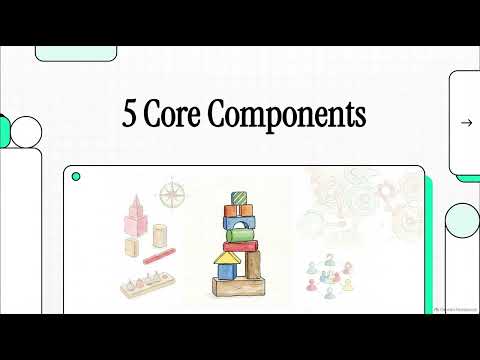
Core Components of an Adolescent Erdkinder Montessori Curriculum
1. Practical work and economic understanding
Purposeful work is central to the Erdkinder philosophy. Students may grow food, prepare meals, maintain a space, build products, or help operate a small school-based enterprise. These experiences introduce planning, quality, cooperation, and the relationship between effort and outcomes. They can also open meaningful discussions about labor, resources, trade, entrepreneurship, and economic interdependence.
A well-designed program does not treat practical work as a reward or a break from “real” learning. It is part of the learning. Students might keep records of materials, estimate expenses, compare prices, calculate revenue, and reflect on how decisions affect the group. Adults should be transparent about the purpose of each activity and ensure that work is educational, safe, and appropriate for students.
2. Academics connected across subject areas
Montessori adolescent programs typically address the same broad academic fields families expect from a secondary education: language arts, mathematics, sciences, history, geography, and the arts. The difference is often in how subjects are organized. A shared question or project can bring several disciplines together without erasing the distinct knowledge and skills each requires.
- Science: ecology, agriculture, environmental systems, observation, experimentation, and evidence-based reasoning.
- Mathematics: measurement, geometry, statistics, budgeting, proportions, and practical problem-solving.
- Language arts: close reading, research, discussion, persuasive writing, documentation, and reflection.
- History and social studies: civilizations, culture, labor, exchange, geography, and the development of communities.
- Arts and design: visual communication, performance, craft, creative expression, and thoughtful product design.
Integration should not become an excuse for gaps. Families can ask how a school maps projects to academic standards, teaches foundational skills explicitly, and checks whether each student is making progress.
An adolescent community is a place to practise cooperation, negotiation, and mutual respect. Students may share responsibility for routines, plan events, manage group projects, and resolve disagreements with adult support. These situations make social learning concrete: a decision affects other people, and repair matters when something goes wrong.
Community participation should include genuine student voice, not simply a list of chores. Effective programs help adolescents understand why shared responsibilities exist, invite them to improve routines, and provide appropriate ways to raise concerns. Clear expectations and consistent adult relationships help make independence safe and meaningful.
4. Contact with nature and the wider world
Outdoor learning is valuable in Erdkinder education because it lets students observe change, interdependence, and environmental limits firsthand. A garden or field study can prompt questions about biodiversity, weather, water, food systems, and land use. Urban programs can pursue similar aims through parks, community gardens, local businesses, museums, and partnerships with neighborhood organizations.
The goal is not to romanticize rural life. It is to help students understand that human communities depend on natural systems and make choices that affect them. Strong programs connect outdoor experiences to careful observation, research, discussion, and action.
How Erdkinder Learning Compares With Conventional Secondary School
| Area | Erdkinder-inspired Montessori | Conventional model |
| Learning structure | Often organized around integrated projects, sustained work, and individual or small-group study. | Often organized around separate subjects, scheduled periods, and whole-class lessons. |
| Practical experience | Purposeful work may be part of the academic and social curriculum. | Practical activities may be concentrated in electives, labs, or extracurricular programs. |
| Student responsibility | Students practise planning, decision-making, and shared community duties with adult guidance. | Responsibilities often focus on assignments, classroom expectations, and assessment deadlines. |
| Assessment | May include portfolios, demonstrations, project work, written assessments, and teacher feedback. | May rely more heavily on grades, tests, and course-based assignments. |
| Setting | May use farms, gardens, workshops, school enterprises, or community partnerships. | Typically centers on classrooms, laboratories, and school facilities. |
These are broad tendencies, not guarantees. Montessori schools vary, and conventional schools may also provide excellent experiential learning. Families should investigate what students actually do, how learning is assessed, and whether the program suits a particular adolescent.
What a Typical Erdkinder Project Might Look Like
Imagine a group planning a seasonal produce stand. Students research which crops grow locally, design a planting schedule, track growth, and calculate the space and materials required. They write instructions, document observations, and use measurements and data to adjust their plans. Later, they might create signs, communicate with customers, record sales, and discuss pricing, waste, and the responsibilities involved in running a small enterprise.
The project can bring science, mathematics, communication, design, and economics together. But it should also be accompanied by direct instruction: students may need explicit lessons in fractions, persuasive writing, plant biology, or data interpretation. A practical project supplies purpose and context; teaching supplies the tools to do the work accurately and thoughtfully.
Benefits, Challenges, and Questions for Families
Potential benefits
- Academic concepts gain relevance through real applications and sustained projects.
- Students practise initiative, time management, collaboration, and problem-solving.
- Community work can strengthen belonging and a sense of contribution.
- Contact with nature and practical systems can deepen environmental and economic understanding.
These outcomes depend on program quality, not on the “Erdkinder” label alone. A strong environment combines freedom with structure, practical activity with academic rigor, and student choice with attentive adult guidance.
Potential challenges
Programs may differ in staffing, facilities, curriculum documentation, and access to outdoor or work-based opportunities. Some families may also want clarity about state standards, graduation requirements, high-school transitions, or preparation for college and technical training. A project-based approach still needs systematic instruction and evidence that students are developing essential skills.
When visiting a school, ask how teachers monitor individual progress, what students do during a typical week, how safety is handled, and how practical work connects to academic goals. Ask to see examples of student work and assessment criteria. It is also reasonable to ask how the school supports students who need additional help or who prefer more explicit structure.
Expert Tips for Understanding the Philosophy in Practice
- Look beyond the farm imagery. Ask whether students have meaningful responsibility and whether their work connects to learning goals.
- Check for academic balance. Find out how the program teaches core knowledge and skills, not only how it organizes projects.
- Ask how independence develops. Good educators explain the steps students take as they move from supported practice toward greater ownership.
- Review assessment evidence. Portfolios and projects can be informative when paired with clear criteria, feedback, and progress records.
- Consider the individual student. The best fit depends on a young person’s interests, learning needs, and response to collaborative, hands-on work.
Frequently Asked Questions About the Adolescent Erdkinder Montessori Curriculum

What age is the Erdkinder Montessori program designed for?
Erdkinder is generally associated with adolescence, approximately ages 12 to 18. The exact age range and program structure vary by school. Some schools serve middle-school students, while others offer a combined adolescent community or a secondary program.
Does an Erdkinder Montessori curriculum require students to live on a farm?
No. Montessori’s vision emphasized contact with nature, practical work, and community life, but an Erdkinder-inspired program can operate in an urban or suburban setting. Gardens, workshops, local organizations, and community enterprises can provide relevant experiences.
How does Montessori adolescent education teach academic subjects?
Students may study language arts, mathematics, science, history, geography, and the arts through a combination of direct lessons, independent work, discussion, and interdisciplinary projects. Families should ask how the school tracks subject-specific skills and academic progress.
Is the Erdkinder approach academically rigorous?
It can be rigorous when projects are supported by explicit instruction, thoughtful research, challenging questions, and clear assessment. Hands-on learning does not automatically guarantee academic depth, so it is important to examine student work and understand how the program meets learning expectations.
What is the difference between an Erdkinder school and a traditional Montessori classroom?
The Erdkinder model applies Montessori principles to adolescent development. It places particular emphasis on purposeful work, social contribution, practical independence, and understanding the wider community. The specific activities differ from school to school.
How can parents choose an Erdkinder Montessori school?
Visit the program, speak with educators and students, review examples of assessment, and ask how the school supports academic growth, safety, inclusion, and transitions after graduation. Look for a coherent connection between the school’s philosophy and students’ everyday experiences.
Conclusion: Education Connected to Life
The adolescent Erdkinder Montessori curriculum philosophy begins with a simple but demanding idea: young people deserve opportunities to participate meaningfully in the world they are preparing to enter. Through practical work, integrated academic study, community responsibility, and contact with nature, students can learn to connect knowledge with action. The approach is not a prescribed farm-school formula, nor is it a substitute for strong teaching. It is a developmental vision that asks educators to make learning purposeful, rigorous, and responsive to adolescent needs. For families, the most useful question is not whether a school uses the Erdkinder name, but whether its daily practice helps students become capable learners and thoughtful contributors.
