


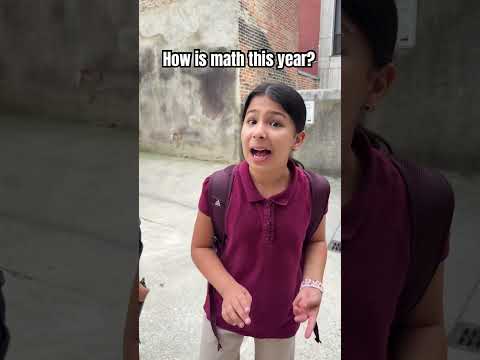
All-girls middle school honors math can offer academically motivated students a focused setting to deepen mathematical understanding, build confidence, and prepare for challenging high school courses. But the words “all girls” and “honors” do not, by themselves, tell families what a program teaches or whether it is a good fit. The strongest programs combine rigorous, grade-appropriate content with thoughtful instruction, meaningful collaboration, and support for students who are still developing confidence. This guide explains what to look for, how honors math typically differs from standard coursework, and how students and families can make the most of the experience.
What Is All-Girls Middle School Honors Math?
All-girls middle school honors math is an advanced or accelerated mathematics course offered in a girls-only school or learning environment. Depending on the school, it may serve students in grades six through eight, cover material more quickly than a standard class, explore topics in greater depth, or combine both approaches. The course might be called honors mathematics, advanced math, accelerated math, or an enrichment pathway; course names are not standardized, so families should ask about the actual curriculum.

A single-sex setting describes the school or class environment, not a particular teaching method or guaranteed academic outcome. Students in an all-girls setting still have varied interests, learning preferences, prior preparation, and goals. A well-designed program recognizes that diversity rather than assuming all girls learn in the same way.
The most useful question is therefore not simply, “Is it honors?” but, “What will students learn, how will they learn it, and what support is available?” Look for clear learning goals, challenging mathematical tasks, regular feedback, and opportunities to explain and revise reasoning.
How Honors Math Differs From a Standard Course
Honors math is not necessarily a longer list of harder problems. Strong advanced instruction asks students to make connections, justify conclusions, choose strategies, and apply mathematics in unfamiliar situations. Students may encounter concepts earlier or move through familiar material at a faster pace, but speed alone is not a reliable measure of depth.
| Area | Typical standard course | Potential honors emphasis |
| Content | Grade-level standards and core skills | Greater depth, extension topics, or earlier algebra concepts |
| Problem solving | Practice with taught methods and applications | Multistep, open-ended, and unfamiliar problems |
| Class discussion | Teacher modeling followed by guided practice | Comparing strategies and defending mathematical claims |
| Pace | Time for instruction, practice, and review | May move faster, while still allowing time for understanding |
| Assessment | Checks for accuracy and grade-level mastery | May also assess reasoning, communication, and transfer |
These are common differences, not guarantees. One school’s honors course may emphasize enrichment, while another may primarily accelerate students toward high school algebra. Ask for a course description, sample assignments, and a typical unit sequence before comparing programs.
Core Topics Students May Study
Middle school mathematics builds a connected foundation. Honors students should strengthen core ideas rather than skip past them. The exact sequence varies by school, grade placement, and local standards, but many programs include the following strands.
- Number sense and operations: Fractions, decimals, integers, ratios, proportions, percentages, and rational-number calculations.
- Expressions and equations: Variables, equivalent expressions, solving linear equations, inequalities, and translating word problems into mathematical models.
- Geometry and measurement: Angle relationships, area, surface area, volume, scale drawings, coordinate geometry, and geometric reasoning.
- Statistics and probability: Data displays, measures of center and variability, sampling, probability, and interpretation of evidence.
- Patterns and functions: Tables, graphs, rules, sequences, proportional relationships, and introductory linear functions.
Advanced classes may extend these ideas through algebraic modeling, more complex systems of equations, geometric proofs, combinatorics, or mathematical investigations. The goal is not to expose students to advanced vocabulary for its own sake. Students should be able to explain what a concept means, when it is useful, and how it relates to ideas they already know.
Benefits of a Girls-Only Learning Environment
Families may consider an all-girls school for many reasons, including community, school culture, and educational philosophy. In mathematics, a supportive classroom can help students feel comfortable asking questions, sharing unfinished thinking, and taking on visible leadership roles. A girls-only setting may provide more opportunities for students to see themselves represented in classroom discussions and in examples of mathematical achievement.
However, the environment matters more than the label. A program should make participation equitable, encourage intellectual risk-taking, and treat mistakes as part of learning. Teachers should invite a range of students to contribute, avoid assumptions about confidence or ability, and present mathematics as a discipline involving creativity, persistence, and collaboration.
Families can evaluate the classroom culture by asking students and teachers specific questions: Who explains solutions? How are group roles assigned? What happens when a student gives an incorrect answer? Are students encouraged to try multiple approaches? Strong answers describe routines and examples rather than relying only on broad claims about empowerment.
Is Honors Math the Right Fit?
Honors placement should reflect readiness and interest, not pressure to follow peers or collect advanced course titles. A student may be a good candidate if she is comfortable with prerequisite skills, curious about challenging problems, willing to explain her reasoning, and prepared to seek help when needed. She does not need to be instantly fast or error-free. Persistence and a willingness to learn from feedback matter more than flawless performance.
Questions to ask before enrolling
- What skills and topics are prerequisites for this course?
- How does the school determine placement: teacher recommendation, assessment, grades, or a combination?
- Does honors mean deeper learning, faster pacing, early high school content, or all three?
- How much homework is typical, and what kind of independent work is expected?
- What tutoring, office hours, or reassessment options are available?
- How does the course prepare students for the next math class and eventual high school sequence?
Placement policies should be transparent and revisited when appropriate. If a student is motivated but has gaps in fractions, integer operations, or proportional reasoning, targeted review may be more helpful than immediate acceleration. Conversely, a student who has mastered grade-level work may benefit from enrichment even if one test score does not capture her full ability.
How Students Can Succeed Without Burning Out
Effective study habits make a demanding course more manageable. The aim is consistent understanding, not marathon homework sessions or constant comparison with classmates. Students can use a simple cycle: attempt, check, explain, and revisit.
- Try problems before looking at examples. A first attempt reveals what is understood and where a question remains.
- Show the reasoning. Writing steps makes it easier to spot errors and helps teachers give useful feedback.
- Keep an error log. Record the type of mistake, why it happened, and how to recognize it next time.
- Review a little, regularly. Short practice sessions across the week help keep earlier skills available.
- Ask a precise question. Instead of “I don’t get it,” identify the step, definition, or decision that feels unclear.
Families can support this routine by providing a predictable study space, encouraging breaks, and asking about ideas rather than only grades. Helpful prompts include, “What strategy did you try?” and “What would you do differently next time?” If stress, sleep loss, or persistent frustration becomes routine, discuss workload and support with the teacher. Challenge should be productive, not overwhelming.
What Parents Should Look for in a Program
Course quality is visible in both the curriculum and the daily learning experience. A rigorous program should have coherent sequencing: new concepts build on secure foundations, and students have opportunities to revisit important ideas. Lessons should include direct instruction when appropriate, independent thinking, discussion, practice, and application—not one repetitive format every day.
Look for assessments that reveal more than whether a student selected the right answer. Written explanations, projects, quizzes, and conferences can show whether she understands the reasoning and can transfer it to a new context. Feedback should be specific and actionable. “Review equations” is less useful than identifying a particular misconception and suggesting a practice strategy.
Also ask how teachers coordinate with the next grade or high school. A strong middle school honors sequence prepares students for future coursework without sacrificing understanding for the sake of getting ahead. The school should be able to explain how it handles course transitions, placement decisions, and students who need either additional challenge or extra support.
Common Misconceptions About Honors Math
- “Honors means every student is naturally gifted.” Readiness develops through prior opportunity, instruction, practice, and support. A course should not treat ability as fixed.
- “Faster is always better.” Acceleration can be appropriate, but rushing through concepts may leave gaps. Depth and durable understanding matter.
- “A high grade proves the course is a good fit.” Grades provide information, but so do engagement, stress, confidence, and the quality of learning.
- “Girls need a different kind of math.” Mathematical standards are not gender-specific. A welcoming environment should expand participation without relying on stereotypes.
- “One placement test decides everything.” A test is one data point. Teachers should consider coursework, growth, student interest, and relevant learning needs.
Frequently Asked Questions

What is taught in all-girls middle school honors math?
Most courses cover grade-level number operations, ratios, algebraic thinking, geometry, statistics, and probability, with added depth or acceleration. Some programs introduce high school algebra or functions earlier. Families should check the school’s syllabus because course titles and sequences vary.
How can I know if my daughter is ready for middle school honors math?
Readiness usually includes a solid grasp of prerequisite skills, curiosity, persistence, and willingness to explain thinking. Speed is not the only indicator. Ask the school how it evaluates placement and whether it offers a trial period, diagnostic assessment, or support for skill gaps.
Does an all-girls honors math program improve math confidence?
It can provide a community in which students have frequent opportunities to participate and lead, but outcomes depend on teaching practices and school culture. Look for equitable discussion routines, constructive feedback, visible role models, and a classroom where questions and mistakes are treated respectfully.
Is middle school honors math the same as taking algebra early?
No. Some honors programs accelerate students into algebra, while others remain centered on middle school standards and explore them in greater depth. Ask whether the course earns or replaces a high school-level credit and how it affects later placement.
How much homework should students expect in an honors math class?
Workload differs by school, teacher, and grade. Students may have regular practice and occasional projects, but excessive hours should not be assumed to be proof of rigor. Request a realistic weekly estimate and learn how teachers respond when a student is consistently overwhelmed.
What should families do if honors math becomes too stressful?
Start by speaking with the teacher about workload, specific concepts, and available support. A tutoring plan, adjusted study routine, or placement review may help. The objective is sustained learning and well-being, not remaining in a course solely because its title sounds prestigious.
Conclusion
The best all-girls middle school honors math program pairs meaningful academic challenge with strong teaching, clear expectations, and a culture where students can take intellectual risks. Families should look beyond labels to examine curriculum, pacing, assessment, support, and the transition to future courses. Students thrive when they build solid foundations, practice explaining their reasoning, and ask for help early. With the right fit, honors math can do more than prepare students for advanced coursework: it can help them become confident, flexible problem-solvers who see mathematics as something they can understand, question, and use.
