


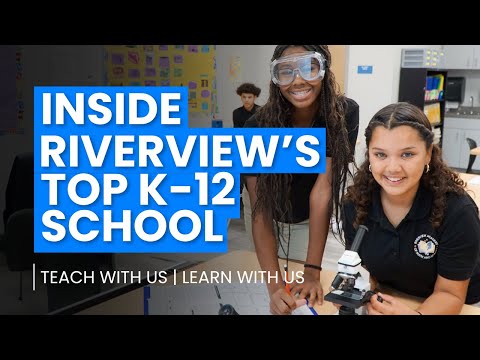
An arts focus charter curriculum is not simply a traditional school schedule with extra music or drawing classes added on. It uses the arts as a central part of how students learn, create, communicate, and demonstrate understanding. A STEM focus charter curriculum, by contrast, emphasizes science, technology, engineering, and mathematics through investigation, design, and problem-solving. Both approaches can support strong academic learning, and the most effective programs often connect them: students might use geometry to build a sculpture, write code for an interactive artwork, or study sound waves while composing music. For families comparing school options, understanding the curriculum, daily instruction, and measures of student progress matters more than the label alone.
What an Arts Focus Charter Curriculum Includes
An arts focus charter school organizes learning around disciplines such as visual art, music, theater, dance, media arts, or creative writing. The arts may appear as dedicated classes taught by specialist educators, as projects integrated into general education, or as a combination of both. A well-designed program protects time for direct arts instruction while also using artistic practices to deepen learning in other subjects.

For example, students may study shape, proportion, and perspective in visual art while learning measurement and spatial reasoning in mathematics. In a theater project, they may analyze a text, develop characters, rehearse dialogue, and present an interpretation. These activities involve subject knowledge as well as planning, collaboration, revision, and communication.
Core features to look for
- Regular instruction: Students receive consistent, scheduled arts learning rather than occasional enrichment activities.
- Qualified educators: Teachers have relevant arts expertise and collaborate with classroom educators where appropriate.
- Progressive skill development: Projects build on prior knowledge, technique, vocabulary, and creative independence.
- Student choice and reflection: Learners make meaningful decisions, revise work, and explain their artistic process.
- Public sharing: Performances, exhibitions, portfolios, or presentations give students an authentic audience.
- Access for varied learners: Instruction accommodates different abilities, experience levels, languages, and learning needs.
Arts integration is strongest when it preserves the integrity of both subjects. A painting lesson can teach color theory and composition while reinforcing historical understanding, but it should not be treated as a substitute for teaching history or visual-art techniques. Families can ask how often students receive arts instruction, what they learn at each grade level, and how teachers assess both artistic growth and academic content.
What a STEM Focus Charter Curriculum Emphasizes
A STEM focus charter curriculum centers learning on science, technology, engineering, and mathematics. Students investigate questions, interpret evidence, design solutions, test ideas, and use mathematical reasoning. In a strong STEM program, hands-on work is not just a reward after a lesson. It is part of a planned sequence that connects core concepts to practical challenges.
A unit on water quality, for instance, could involve forming a scientific question, measuring samples, organizing results in a spreadsheet, calculating differences, and presenting a recommendation. An engineering challenge might ask students to design a bridge that meets specific limits for cost, materials, and load. Students learn that a first attempt is rarely the final answer: testing and revision are essential parts of the process.
How rigorous STEM learning looks in practice
- Students ask investigable questions and distinguish evidence from assumption.
- Teachers explicitly teach the science and mathematics needed to complete a project.
- Technology is used purposefully for research, modeling, coding, analysis, or communication.
- Engineering tasks include constraints, criteria, testing, and documented redesign.
- Students explain their reasoning, interpret results, and consider the limits of a solution.
Families evaluating a STEM charter school can look beyond robotics clubs or impressive equipment. Ask whether all students have access to meaningful STEM instruction, how projects align with grade-level standards, and how the school supports foundational reading and mathematics. A memorable project can be valuable, but it should develop knowledge rather than replace it.
Arts Focus vs. STEM Focus: A Practical Comparison
Arts and STEM programs have different areas of emphasis, but they share important learning habits. Both ask students to make decisions, work through uncertainty, communicate ideas, and improve their work using feedback. The distinction is usually about how a school allocates instructional time and organizes its curriculum, not whether students will encounter other subjects.
| Curriculum feature | Arts focus | STEM focus |
| Typical anchor activities | Creating, performing, interpreting, and critiquing artistic work | Investigating, modeling, coding, designing, and testing solutions |
| Common evidence of learning | Portfolio, performance, exhibition, rehearsal notes, and reflection | Lab records, models, calculations, code, prototypes, and explanations |
| Skills emphasized | Expression, technique, interpretation, creativity, and audience awareness | Scientific reasoning, quantitative thinking, systems, and iteration |
| Useful family questions | How do students build skills across grade levels, and how is progress assessed? | How do projects connect to science and mathematics standards, and how are designs tested? |
This comparison is a guide, not a ranking. A school’s focus does not guarantee a particular teaching quality or outcome. The curriculum should be assessed as a whole: core academics, specialist instruction, class time, student support, enrichment, and the quality of feedback all matter.
Why Arts and STEM Can Work Better Together
The boundary between the arts and STEM is often less rigid in real projects than it appears in subject labels. Architecture combines design, geometry, materials, and engineering. Music involves pattern, timing, acoustics, and technology. Animation brings together storytelling, drawing, motion, software, and computational thinking. These connections give students opportunities to apply skills in a context with a clear purpose.
For example, a class designing a small performance space could measure the room, compare material options, sketch layouts, estimate costs, and consider how the space will sound. Students might then create a scale model and present their choices to classmates. The project draws on mathematics, engineering, visual communication, and persuasive speaking without reducing any one discipline to decoration.
What thoughtful integration requires
- Start with clear learning goals. Identify what students should understand in each subject before choosing the project.
- Teach essential skills directly. Provide instruction in tools, techniques, vocabulary, and concepts students need.
- Build in revision. Students should have time to test an idea, receive feedback, and make informed changes.
- Assess the process and the result. Consider subject knowledge, reasoning, craftsmanship, collaboration, and reflection.
- Make the connections visible. Ask students to explain how one discipline informed decisions in another.
Choosing a Charter School: Questions for Families
Charter schools can differ substantially in mission, schedule, enrollment policies, staffing, and resources. Before choosing an arts or STEM focus school, review its curriculum and speak with educators about what students do during an ordinary week. A school tour or open house can help, but concrete examples are more informative than broad promises about creativity or innovation.
- How many weekly hours are devoted to arts or STEM instruction at each grade level?
- Who teaches specialist classes, and what training or experience do they have?
- How does the focus curriculum connect with reading, writing, mathematics, science, and social studies?
- What work do students produce, and how do teachers give feedback on it?
- How does the school support students who need additional academic help or advanced challenges?
- Are instruments, art materials, devices, labs, and performance spaces available to every student?
- How does the school communicate progress, attendance expectations, and family involvement opportunities?
Ask to see a sample unit, student portfolio, project rubric, or performance schedule. If possible, observe a class rather than relying only on promotional materials. Look for active student thinking: learners should be able to describe what they are learning, why it matters, and what they will do next. Also check practical details such as transportation, meal services, enrollment dates, and any participation costs for supplies or activities.
From Beginner to Advanced: How Learning Can Develop

A coherent focus curriculum changes as students grow. In early grades, instruction typically introduces foundational vocabulary, materials, routines, observation, and safe tool use. Young students might explore rhythm, shape, balance, sorting, or simple building challenges. At this stage, frequent practice and opportunities to describe choices are more valuable than a polished final product.
In the middle grades, students can compare methods, work with more complex tools, and use subject-specific evidence. An arts student might analyze how staging changes a scene’s meaning or combine media with a deliberate visual plan. A STEM student might record trial results, identify patterns, and revise a prototype against defined criteria. Teachers should help students move from trying an activity to explaining the reasoning behind their decisions.
Advanced learners benefit from greater independence, deeper specialization, and authentic audiences. They may develop a sustained portfolio, produce a performance, conduct an investigation, or design a solution for a community partner. Advanced work still needs guidance: expert feedback, relevant safety practices, ethical research, and appropriate academic foundations remain important at every level.
Assessment: Measuring Growth Without Flattening Creativity
Assessment in an arts focus or STEM focus school should make learning visible without suggesting that every valuable skill can be captured by one score. Teachers may use rubrics, written explanations, demonstrations, quizzes, project records, student conferences, and portfolios. The best evidence depends on the goal: a science concept may require a precise explanation, while growth in performance may be clearer through rehearsal and reflection over time.
Families can ask whether assessment criteria are shared with students before work begins. Useful feedback identifies what is working, what needs development, and what action the learner can take next. For a design project, this could mean distinguishing a strong idea from a prototype that has not yet met its load requirement. For visual art, it might mean discussing composition or technique while respecting the student’s intention and interpretation.
Long-Tail FAQs About Arts and STEM Charter Curricula
What is the difference between an arts focus charter school and a regular public school?
An arts focus charter school places additional emphasis on arts learning, often through scheduled specialist classes and projects connected to core subjects. The exact difference depends on the school’s approved program and timetable. Families should compare actual instructional hours, teacher qualifications, student work, and academic support rather than assuming every arts charter follows the same model.
Does an arts-based curriculum still teach reading, math, and science?
It should. An arts focus describes a curricular emphasis, not a replacement for core academic instruction. Students still need systematic teaching in literacy, mathematics, science, and other required subjects. Ask how the school meets applicable academic requirements and how arts projects reinforce, rather than displace, grade-level learning.
What do students learn in a STEM focus charter curriculum?
Students develop science, technology, engineering, and mathematics knowledge through direct instruction and applications such as experiments, coding, data analysis, and design challenges. A rigorous curriculum includes foundational concepts, evidence-based reasoning, and reflection—not only hands-on activities or access to technology.
Can students combine art and STEM in the same school program?
Yes. Schools may connect disciplines through projects in areas such as architecture, digital media, music technology, animation, environmental design, and product development. Strong interdisciplinary learning includes clear goals for each subject, direct skill instruction, and assessment that checks what students actually learned.
How can parents evaluate whether a charter school’s focus program is high quality?
Review the schedule, curriculum examples, student work, assessment approach, and qualifications of specialist teachers. Ask how the program serves different learners and how it tracks progress. A high-quality school can explain what students learn at each grade, how projects build on earlier work, and how families are informed about academic growth.
Conclusion
An arts focus charter curriculum and a STEM focus charter curriculum offer different pathways into deep learning, but neither should be judged by its label alone. Look for consistent instruction, strong core academics, skilled teachers, meaningful student work, thoughtful assessment, and access for every learner. The strongest programs help students build expertise while making connections across disciplines. Whether a child is composing, coding, performing, experimenting, or designing, a well-planned curriculum turns curiosity into knowledge—and gives students the tools to explain, improve, and share what they create.
