


Choosing among the best balanced literacy elementary schools takes more than looking for a reading corner, a leveled-book library, or a daily literacy block. Families need to understand what instruction looks like in practice: how children learn the relationships between letters and sounds, build fluency, develop vocabulary and comprehension, and get support when reading is difficult. A strong school brings these elements together in a coherent program, adapts instruction to students’ needs, and uses evidence of learning to guide next steps. This guide explains what balanced literacy can mean in an elementary classroom, what to look for when evaluating schools, and which questions help families make a confident, informed choice.
What Does “Balanced Literacy” Mean in an Elementary School?
Balanced literacy is a broad term for an approach that combines multiple kinds of reading and writing instruction. In many schools, the model includes whole-class lessons, small-group teaching, independent reading, shared reading, guided reading, phonics, writing workshops, and teacher conferences. The intended balance is between explicit teaching and opportunities for children to practice, explore texts, and apply skills.
The term is not used consistently. Two schools may describe their programs as balanced literacy while teaching reading quite differently. In one classroom, students might receive systematic, explicit instruction in phonemic awareness and phonics alongside meaningful reading and writing. In another, teachers may rely more heavily on leveled books and strategies such as guessing an unfamiliar word from a picture or sentence. Families should therefore ask what students actually learn and how teachers respond when a child cannot read a word—not rely on the program label alone.
High-quality elementary literacy instruction develops several connected strands:
- Phonological and phonemic awareness: Hearing and working with sounds in spoken words.
- Phonics and decoding: Connecting written letters and spelling patterns to speech sounds so students can read unfamiliar words.
- Fluency: Reading accurately, at an appropriate pace, and with expression.
- Vocabulary and language: Learning word meanings, sentence structures, and the knowledge needed to understand texts.
- Comprehension: Making sense of, discussing, and thinking critically about what is read.
- Writing and spelling: Using language to communicate, while building knowledge of spelling patterns, grammar, and written composition.
What the Best Balanced Literacy Schools Have in Common
The best balanced literacy elementary schools do not treat reading as one activity or expect a single teaching method to meet every need. They create a connected sequence: teachers model a skill, students practice with feedback, and children apply what they have learned in real reading and writing. Strong programs also make room for rich stories, informational texts, discussion, and student choice without sacrificing foundational instruction.
Explicit instruction in foundational skills
Look for a planned progression in phonics and spelling, not just occasional lessons when a teacher notices a need. Students should learn how sounds map to letters, how to blend sounds to read words, and how spelling patterns become more complex over time. Instruction should include modeling and guided practice, with cumulative review so that previously taught skills remain accessible.
Ask how teachers teach a child to decode an unfamiliar word. A clear answer should describe examining the letters and spelling patterns, connecting them to sounds, and blending the word—not simply using a picture or guessing from context. Context helps readers understand meaning, but it should not replace accurate word reading.
Purposeful small-group and whole-class teaching

Small-group instruction can help teachers address a shared learning need, while whole-class lessons provide access to common knowledge, texts, and vocabulary. In an effective classroom, groups are flexible and informed by current evidence. They are not permanent labels that limit a child’s opportunities or determine which books a student may ever read.
During a school visit, ask what students do while the teacher meets with a group. Independent reading and literacy stations should have clear learning purposes and expectations. Students should not spend long periods on activities that keep them busy but do not build reading, writing, or language skills.
Rich texts and knowledge-building
Children benefit from hearing and reading engaging fiction, poetry, and nonfiction. Strong schools choose books that expand students’ knowledge of science, history, the arts, and the world around them. Teachers help students discuss ideas, explain evidence, learn new vocabulary, and connect information across texts. A balanced literacy program should include both student-selected reading and carefully chosen shared texts, with access to books that reflect different experiences, cultures, and perspectives.
How to Evaluate an Elementary Literacy Program
Families can learn more by combining conversations with teachers, classroom observations, and questions about student progress. A school’s curriculum documents are useful, but daily practice matters just as much. Try to find out what instruction looks like for a typical student, as well as what happens when a student needs extra help.
- Ask for the literacy schedule. Find out how much time is devoted to phonics, reading, writing, oral language, and independent practice. Ask how instruction changes across kindergarten, first grade, and later elementary years.
- Ask how teachers check progress. Schools should use more than one source of information, such as classroom work, reading accuracy, fluency, spelling, and comprehension. Ask how often assessments occur and how results influence instruction.
- Ask what happens when a student struggles. Learn how quickly the school provides targeted support, how that support is delivered, and how the team checks whether it is working. Ask how families are involved.
- Observe a lesson if possible. Notice whether the teacher explains the learning goal, models a skill, checks understanding, and gives students useful feedback. Look for active participation from students across different skill levels.
- Ask about teacher training and consistency. Find out how staff learn the curriculum and coordinate across grade levels. Consistent, knowledgeable instruction helps students build skills without needless gaps or repetition.
Balanced Literacy, Structured Literacy, and Reading Science
Parents sometimes encounter a choice framed as “balanced literacy versus phonics.” That framing can obscure the real question: does the school provide explicit, systematic instruction in foundational reading skills while also building language, knowledge, comprehension, and a love of books? These goals are compatible. Children need opportunities to read meaningful texts, and many also need direct teaching to become accurate, confident word readers.
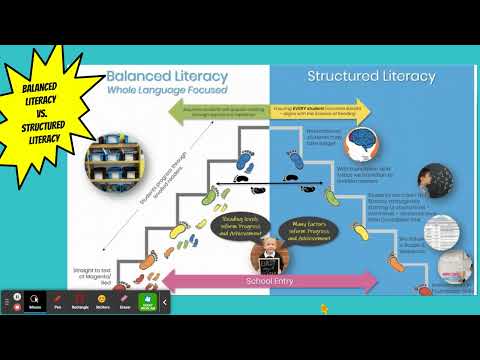
Structured literacy generally refers to instruction that is explicit, systematic, cumulative, and responsive to student needs. It often emphasizes phonology, sound-symbol relationships, decoding, spelling, morphology, and language comprehension. A school may use practices associated with structured literacy within a broader literacy program. The important point for families is to investigate the actual teaching sequence and the evidence teachers use—not to assume that a particular label guarantees quality.
| Area to compare | Questions to ask | Signs of a strong approach |
| Foundational skills | How are phonics and spelling taught? | Skills follow a clear sequence, with modeling, practice, and review. |
| Reading materials | What do children read during lessons? | Students read appropriately challenging texts and have access to rich, varied books. |
| Assessment | How does the school identify progress and difficulty? | Teachers use multiple measures and adjust instruction based on results. |
| Intervention | What support is available when a child falls behind? | Targeted help begins promptly and progress is monitored. |
| Comprehension | How do students build understanding? | Instruction includes vocabulary, background knowledge, discussion, and text-based thinking. |

Matching a School to Your Child
There is no single “best balanced literacy school” for every child. The right fit depends on a student’s strengths, learning needs, interests, and the school’s ability to provide appropriate teaching and support. A confident reader may thrive when offered challenging books and deeper discussion. A beginning reader may need clear instruction in sound-letter relationships, frequent feedback, and carefully chosen practice. A multilingual learner may benefit from explicit vocabulary teaching and opportunities to connect classroom learning with home languages and prior knowledge.
If your child has dyslexia or another learning difference, ask how the school identifies needs and delivers intervention. Find out whether staff have training in evidence-based reading instruction, how services are coordinated with classroom teaching, and how progress is communicated. A school should be able to explain its process without promising a quick fix or relying on vague assurances that a child will “catch up naturally.”
Families can support literacy at home without trying to replace classroom teaching. Reading aloud, talking about stories and nonfiction, visiting a library, and showing children that adults read for many purposes all help build a positive reading culture. If a child struggles to read independently, shared enjoyment of books still matters; adults can read aloud while the school addresses specific skill needs.
Common Warning Signs to Explore Further
One classroom visit cannot tell the whole story, and a single practice does not automatically define a school’s quality. Still, certain answers deserve follow-up. Be cautious if staff cannot explain how children learn to decode words, if reading groups remain fixed without reassessment, or if the school cannot describe how it supports students who are not making expected progress.
- Teachers encourage students to guess unfamiliar words primarily from pictures or sentence context.
- There is little evidence of a planned phonics and spelling sequence.
- Reading assessment results are collected but not clearly used to adjust teaching.
- Students who struggle wait a long time for additional instruction or receive support without measurable goals.
- The school emphasizes reading volume or book level while giving little attention to accuracy, vocabulary, knowledge, and comprehension.
These are prompts for a conversation, not a complete verdict. Ask for examples, learn how practices vary by grade, and consider how the school responds to reasonable questions. Transparent communication is itself an important sign of a thoughtful literacy program.
Frequently Asked Questions
How can I find the best balanced literacy elementary school near me?
Start with local school information, then ask each school about its reading curriculum, phonics sequence, assessments, intervention services, teacher training, and classroom routines. If possible, observe instruction and speak with staff about how they support children at different reading levels. Compare what schools do in practice rather than choosing by a program name alone.
What should a balanced literacy classroom look like in first grade?
A strong first-grade classroom typically includes explicit teaching of phonics and spelling, practice reading words and connected text, teacher read-alouds, vocabulary and comprehension discussion, and meaningful writing. Students should receive feedback and have opportunities to read books that are engaging and suitable for practicing the skills they are learning.
Is balanced literacy effective for children who have dyslexia?
The label alone does not tell you whether a program will meet a child’s needs. Many students with dyslexia benefit from explicit, systematic, cumulative instruction in decoding and spelling, along with support for fluency, vocabulary, and comprehension. Ask the school what intervention it offers, who delivers it, how progress is measured, and how instruction changes if the student is not responding.
What questions should parents ask about elementary school reading instruction?
Ask how phonics is taught, how teachers identify reading difficulties, what texts students read, how flexible groups are formed, and how often families receive progress updates. Also ask what happens when classroom instruction is not enough. Specific answers and clear examples are more useful than broad promises about a child’s future success.
How can I tell whether a school’s literacy program is working?
Look for regular evidence of growth in word reading, accuracy, fluency, vocabulary, comprehension, and writing—not just completion of books or movement between reading groups. Teachers should be able to explain how they monitor progress, share results appropriately, and adapt instruction when students need additional support.
Conclusion: Choose for Strong Teaching, Not Just a Label
The best balanced literacy elementary schools bring together skilled teaching, explicit foundational instruction, rich reading and writing experiences, and timely support for students who need more help. When comparing schools, look beyond slogans and ask how reading is taught from the earliest grades through the upper elementary years. A strong school can explain its approach, show how assessment informs instruction, and work with families as children grow into capable, curious readers. Those practical qualities matter far more than whether a school uses “balanced literacy” as its headline description.
