


How many hours should an elementary school spend on balanced literacy each day? There is no single schedule that fits every grade, school, or student, but a useful starting point is to examine the full literacy block—not just the time labeled “reading.” In many elementary classrooms, literacy instruction takes roughly two to three hours across the day, including reading, writing, language, intervention, and independent practice. The exact balance matters more than the number alone: students need explicit instruction in foundational skills, meaningful time with books and ideas, purposeful writing, and support matched to their needs.
For families, teachers, and school leaders searching for “balanced literacy elementary school hours,” the key question is not simply how long children read. It is what they learn during those minutes, how instruction develops from kindergarten through fifth grade, and whether every student receives enough direct teaching to become a fluent, confident reader. This guide explains common schedules, what an effective literacy block can include, how to evaluate instructional time, and what to ask when a school describes its approach as balanced literacy.
What “Balanced Literacy” Means in an Elementary School
Balanced literacy is a broad approach that traditionally combines several ways of teaching reading and writing. A classroom might include teacher read-alouds, shared reading, guided reading in small groups, independent reading, phonics lessons, vocabulary instruction, and writing workshops. The intent is to balance teacher modeling, supported practice, and student choice.
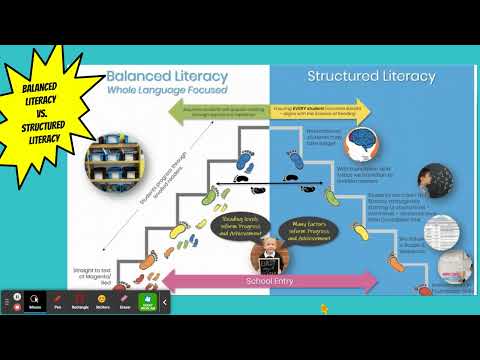
The term does not describe one standardized program or a fixed daily schedule. Two schools may both use the phrase while teaching very different lessons. One may provide systematic phonics and frequent assessment alongside rich literature. Another may emphasize leveled books and guessing from pictures or context, with less explicit instruction in how letters represent sounds. Therefore, families should ask what students actually do and learn rather than assume the label guarantees a particular curriculum.
It is also important to distinguish balanced literacy from structured literacy. Structured literacy refers to explicit, systematic teaching of foundational skills, including phonological awareness, phonics, decoding, spelling, and language. Current reading research supports direct, systematic instruction in these skills, particularly for beginning readers and students who struggle. A strong elementary literacy program can preserve the valuable parts associated with balanced literacy—knowledge-rich texts, discussion, writing, and independent reading—while ensuring that foundational skills are taught clearly and cumulatively.
How Many Elementary School Hours Are Usually Devoted to Literacy?
Many elementary schools schedule approximately 120 to 180 minutes of literacy-related instruction per day. This range is a planning reference, not a universal requirement. Some schools divide the time into a morning reading block and a separate writing period; others integrate reading, language, and writing across subjects. Kindergarten schedules may use shorter lessons and more transitions, while upper elementary grades often sustain longer blocks and apply literacy skills in science and social studies.
When comparing schedules, look at instructional minutes rather than the block’s name. A 150-minute “reading block” may include a lengthy transition, an assembly, or a prolonged period of unsupervised choice. Conversely, a school with a 100-minute dedicated block may provide additional literacy instruction during writing, intervention, and content-area lessons. Ask how much time students spend receiving direct instruction, practicing with feedback, reading connected text, and writing.
| Grade band | Common scheduling consideration | Important learning priorities |
| Kindergarten | Short, varied lessons with movement and repetition | Oral language, print concepts, phonological awareness, letter-sound knowledge, early decoding, and enjoyment of books |
| Grades 1–2 | Consistent daily reading and writing blocks | Systematic phonics, decoding, spelling, fluency, vocabulary, comprehension, and supported writing |
| Grades 3–5 | Longer applications across subjects as well as dedicated instruction | Fluency development, complex vocabulary, comprehension, written response, research, and continued support for unfinished foundational skills |
These are broad patterns, not prescriptions. A student who has already mastered a skill does not need endless repetition, while a student who has not learned it may need additional targeted instruction. The schedule should respond to evidence of learning instead of assuming that every child will progress at the same pace.
What Should Fit Into a High-Quality Daily Literacy Block?
A useful literacy schedule balances explicit teaching with substantial practice. Students need to understand how the written code works and also build knowledge, vocabulary, stamina, and interest through texts. The following components can be arranged in different ways, but each should have a clear purpose.
Foundational skills and phonics
For beginning readers, foundational instruction should be direct and sequential. Lessons may include hearing and manipulating sounds in spoken words, connecting sounds to letters, blending sounds to read words, and spelling words by representing their sounds. Students should have regular opportunities to apply the skill in decodable text—text that includes spelling patterns they have been taught. This helps children practice accurate reading rather than relying on illustrations or memorized patterns to identify unfamiliar words.
As students advance, instruction can address more complex spelling patterns, syllables, morphology, and multisyllabic word reading. Older students who still struggle with decoding should not be expected to “grow out of it” through independent reading alone. They may need explicit instruction that targets the specific skills they have not yet mastered.
Reading comprehension, vocabulary, and knowledge
Comprehension develops through both reading skill and knowledge of language and the world. Teachers can read complex, engaging texts aloud, model how to make sense of a passage, introduce useful vocabulary, and lead discussion that asks students to explain ideas with evidence. Read-alouds are valuable even before children can independently decode the same material because listening comprehension and background knowledge support later reading.
Independent reading also has a place. Students benefit from books they can read successfully and texts that interest them, but independent reading should not replace teacher-led instruction. A classroom library, book choice, and reading stamina are supportive features—not substitutes for teaching students how to read words, understand language, and make meaning.
Writing and language
Reading and writing reinforce one another. A daily schedule may include handwriting, spelling, sentence construction, grammar, composition, and responses to reading. Younger students need instruction in forming letters and encoding words as well as chances to express ideas. Older elementary students benefit from learning how to organize paragraphs, support claims with evidence, revise for clarity, and write for different purposes.
Writing time should include more than a prompt followed by quiet work. Effective instruction makes the process visible: the teacher models a strategy, students try it with guidance, and the teacher provides feedback. Reading, discussion, and writing can also connect around a coherent topic, helping students learn subject matter while building literacy skills.
Example Elementary Literacy Schedules
The schedules below are illustrations, not required formulas. They show how schools might use a 150-minute literacy window while protecting time for explicit instruction, text reading, writing, and targeted support. Breaks, lunch, transitions, and school-specific programs are not included.
| Instructional component | Example minutes | Purpose |
| Whole-class foundational skills or language lesson | 25 | Teach a shared, grade-level skill explicitly |
| Teacher-led reading and text discussion | 30 | Build fluency, vocabulary, comprehension, and knowledge |
| Small-group instruction and targeted practice | 35 | Respond to student needs with guided teaching and feedback |
| Independent or partner reading | 20 | Apply skills, build stamina, and develop reading habits |
| Writing and language | 40 | Develop spelling, sentence skills, composition, and response to texts |
In kindergarten or first grade, a teacher might divide a long block into brief lessons with songs, movement, and hands-on practice. In grades three through five, a schedule may include a longer content-rich read-aloud, explicit vocabulary instruction, small-group decoding support for students who need it, and a writing lesson tied to science or social studies.
How to Judge Whether the Hours Are Working

Time on a schedule does not prove that students are learning. Schools should use regular assessments to identify what children can do and where they need help. Useful information may come from screening measures, phonics and spelling checks, oral reading, writing samples, comprehension tasks, and teacher observation. No single score tells the whole story; multiple measures help educators choose instruction and monitor progress.
Look for a responsive cycle: assess a skill, teach it, give students a chance to practice, check whether they learned it, and adjust the next lesson. If a child is not progressing, the response should be timely and specific. “Read more” is not an intervention plan. A plan should identify the skill being taught, how often instruction occurs, who provides it, and how the school will determine whether it is helping.
Schools should also protect access to grade-level ideas. Students who are developing decoding skills can still participate in rich science, history, and literature through read-alouds, accessible texts, discussion, and supported writing. Intensive foundational instruction should not mean a child is excluded from knowledge-building or meaningful classroom conversation.
Practical Questions for Parents and School Leaders
When reviewing an elementary reading schedule or discussing balanced literacy with a teacher, ask questions that reveal instructional practice:
- How many minutes each day are devoted to foundational reading skills, reading comprehension, and writing?
- How are phonics and spelling skills introduced, practiced, and reviewed over time?
- Do students read connected text that lets them apply the spelling patterns they have learned?
- How does the school identify children who are falling behind, and how quickly does targeted support begin?
- What assessments are used, how often are they reviewed, and how do results change instruction?
- How does the schedule preserve read-alouds, rich vocabulary, discussion, and grade-level content for every student?
Parents can support reading without turning home into another school day. Read aloud together, talk about unfamiliar words and interesting ideas, and make time for children to read books they enjoy. If a child consistently avoids reading, guesses at words, or struggles to spell, share specific observations with the teacher and ask what skills are being taught and how progress is measured.
Common Scheduling Mistakes to Avoid
One common mistake is treating independent reading as a complete reading curriculum. Choice and practice matter, but students also require clear teaching, especially when learning to decode. Another is dividing the day into isolated activities without enough connection: phonics, vocabulary, discussion, and writing are more useful when students get repeated opportunities to apply learning.
Schools can also lose valuable instructional time to transitions or groups that are not matched to student needs. Small-group teaching should have a defined instructional goal, and other students should be engaged in purposeful work. Finally, avoid using one rigid allocation for every learner. Some students need additional decoding practice; others may need vocabulary, fluency, comprehension, or writing support. Equity means ensuring access to effective instruction, not giving every student precisely the same minutes regardless of need.
Frequently Asked Questions
How many hours of balanced literacy should an elementary student have per day?
Many schools provide about two to three hours of literacy-related instruction daily, counting reading, writing, language, and intervention. The appropriate amount depends on grade level and student needs. Ask how those minutes are used and whether assessments show that students are making progress.
Is a 90-minute reading block enough in elementary school?
It can be one important part of a literacy schedule, but 90 minutes may not represent all literacy instruction. Writing, vocabulary, language, intervention, and reading in other subjects may add meaningful time. Evaluate the full day and the quality of instruction rather than relying on the block length alone.
Does balanced literacy include phonics instruction?
It can, but the term does not guarantee that phonics is systematic or explicit. Ask whether skills are taught in a planned sequence, whether children practice blending and spelling, and whether they apply what they learn in connected text. The school’s actual lessons matter more than the label.
How much independent reading time do elementary students need?
Independent reading is valuable for practice, choice, and stamina, but it should complement—not replace—explicit instruction and teacher feedback. The right amount varies by age, reading ability, and classroom schedule. Younger readers especially need close support as they learn foundational skills.
What should parents do if their child is still struggling with reading?
Ask the teacher which specific reading skills are difficult, what instruction or intervention is being provided, and how progress is monitored. Share examples of what you notice at home. If concerns persist, request a meeting to discuss additional assessment and support options.
Is balanced literacy the same as structured literacy?
No. Balanced literacy is a broad classroom approach that combines varied reading and writing practices; structured literacy emphasizes explicit, systematic instruction in language and foundational reading skills. A school can offer engaging books, discussion, and writing while also teaching foundational skills systematically.
Conclusion: Make the Minutes Count
For balanced literacy elementary school hours, a practical benchmark is roughly 120 to 180 minutes of literacy learning across reading, writing, language, and targeted support—but the number is only a starting point. Strong instruction combines explicit foundational skills with rich texts, knowledge-building conversation, meaningful writing, and responsive intervention. Families and educators can evaluate a schedule by asking what students are taught, how they practice, and how the school knows they are progressing. When every minute has a clear purpose and instruction adapts to learner needs, the literacy day becomes more than a block on the timetable: it becomes a foundation for confident reading, thoughtful writing, and lifelong learning.
