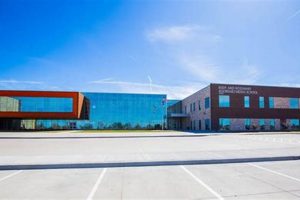
The process of assigning students to specific learning environments within a school often based on academic performance, learning style, or social-emotional needs is a common practice. For example, within a single institution, separate learning tracks might exist, each tailored to a particular student group. This allows educators to create more focused and effective learning experiences.
Differentiated instruction benefits both students and educators. By grouping students with similar learning needs, teachers can tailor their instruction and resources to meet the specific requirements of each group. This can lead to improved academic outcomes, increased student engagement, and a more positive learning environment overall. The historical context of this practice stems from the recognition that a one-size-fits-all approach to education is not always effective. Tailoring educational experiences to individual needs has been a long-standing goal of educational reformers.
This foundational understanding of student placement is crucial for exploring related topics such as curriculum design, teacher training, and the impact of such practices on student achievement and well-being. It also lays the groundwork for discussions about educational equity and access.
Tips for Effective Student Placement
Strategic placement of students within a school setting can significantly impact their academic growth and overall well-being. The following tips provide guidance for creating effective learning environments tailored to individual student needs.
Tip 1: Comprehensive Assessment: Utilize multiple assessment methods, including standardized tests, classroom performance, and teacher observations, to gain a holistic understanding of each student’s strengths and areas for growth. This multifaceted approach ensures a more accurate placement.
Tip 2: Flexible Grouping: Avoid rigid, permanent groupings. Allow for flexibility and movement between groups based on ongoing assessments and student progress. This adaptability ensures that placements remain responsive to individual learning trajectories.
Tip 3: Clear Communication: Maintain open communication with students, parents, and teachers regarding placement decisions and rationale. Transparency builds trust and fosters a collaborative approach to student success.
Tip 4: Ongoing Monitoring and Evaluation: Regularly monitor the effectiveness of placement decisions and make adjustments as needed. Continuous evaluation ensures that placements remain aligned with student needs and contribute to positive outcomes.
Tip 5: Professional Development: Equip educators with the necessary training and resources to effectively teach diverse learners within differentiated settings. Ongoing professional development empowers teachers to meet the unique needs of each student group.
Tip 6: Consider Learning Styles and Social-Emotional Needs: Placement decisions should consider not only academic performance but also individual learning styles, social-emotional needs, and behavioral considerations. This holistic approach creates a more supportive and inclusive learning environment.
By implementing these strategies, schools can create learning environments that maximize student potential and promote academic success for all learners. Effective placement practices are a cornerstone of a thriving educational community.
These placement strategies contribute significantly to creating a positive and productive learning environment. Further exploration of curriculum adaptation and individualized learning plans can enhance these benefits.
1. Academic Performance
Academic performance serves as a cornerstone of effective student placement within a middle school setting. It provides crucial data points, informing decisions about appropriate learning environments and individualized support. Placement based on academic performance aims to create classrooms where students are challenged appropriately, preventing boredom for high-achievers and minimizing frustration for those requiring additional support. For instance, a student demonstrating advanced proficiency in mathematics might be placed in an accelerated program, while a student requiring additional support in literacy might benefit from a targeted intervention group. Cause and effect relationships are evident: appropriate placement based on academic performance can lead to increased engagement, improved learning outcomes, and enhanced student confidence. Conversely, misplacement can contribute to disengagement, declining performance, and decreased self-esteem.
The importance of academic performance as a component of student placement extends beyond simply assigning students to specific classes. It informs instructional strategies, curriculum differentiation, and the allocation of resources. Understanding a student’s academic strengths and weaknesses allows educators to tailor their teaching methods and provide individualized support. This personalized approach is crucial for maximizing learning potential. Consider a student excelling in science but struggling with writing. Placement in a standard science class combined with targeted writing support allows the student to thrive in their area of strength while addressing their specific learning need. This balanced approach promotes well-rounded development and prevents a single area of weakness from hindering overall academic progress.
In conclusion, academic performance plays a pivotal role in creating effective learning environments within middle schools. Using academic data to inform placement decisions leads to improved learning outcomes, increased student engagement, and enhanced student well-being. However, it is crucial to remember that academic performance is just one piece of the puzzle. A holistic approach that considers learning styles, social-emotional needs, and individual circumstances is essential for fostering a truly supportive and successful learning experience for every student. Challenges may include accurately assessing academic performance and ensuring equitable access to appropriate resources and support. Addressing these challenges requires ongoing evaluation, collaboration among educators, and a commitment to continuous improvement in placement practices.
2. Learning Styles
Learning styles represent a crucial factor in optimizing student placement within a middle school environment. Understanding how individual students best acquire and process information allows educators to create learning experiences that maximize engagement and academic success. Effective placement considers these individual learning preferences, contributing to a more supportive and productive educational experience. This exploration delves into the various facets of learning styles and their implications for student placement.
- Visual Learners
Visual learners thrive in environments rich in visual aids such as diagrams, charts, and graphic organizers. They often benefit from note-taking, mind-mapping, and visual representations of information. In a middle school context, placing visual learners in classrooms with teachers who utilize visual aids and providing them with opportunities to create visual projects can significantly enhance their learning experience. For example, a visual learner studying fractions might benefit from diagrams illustrating parts of a whole, while a history student might find timelines and maps particularly helpful.
- Auditory Learners
Auditory learners learn best through listening and verbal communication. Lectures, discussions, and audio recordings are highly effective learning tools for this group. Within a middle school setting, auditory learners benefit from opportunities to engage in discussions, presentations, and oral explanations of concepts. For example, an auditory learner studying a foreign language might benefit from listening to native speakers and engaging in conversations, while a science student might find lectures and podcasts particularly helpful.
- Kinesthetic Learners
Kinesthetic learners learn through physical activity and hands-on experiences. They benefit from movement, experimentation, and tactile engagement with learning materials. In a middle school environment, kinesthetic learners thrive in classrooms that incorporate hands-on activities, experiments, and opportunities for movement. For example, a kinesthetic learner studying geometry might benefit from building shapes with manipulatives, while a social studies student might find role-playing historical events particularly engaging.
- Read/Write Learners
Read/write learners prefer information presented in written format. They excel at taking notes, reading textbooks, and expressing themselves through writing. In middle school, providing opportunities for these learners to engage with written materials, such as research projects, essays, and note-taking activities, can enhance their learning experience. For instance, a read/write learner studying literature might enjoy analyzing written texts and writing essays, while a science student might benefit from detailed note-taking during experiments.
Considering these diverse learning styles within the context of middle school placement allows educators to create learning environments optimized for individual student success. By recognizing and accommodating these preferences, schools can foster a more inclusive and effective learning experience for all students. This can manifest in differentiated instruction, varied assessment methods, and flexible classroom arrangements, ultimately promoting greater engagement and improved academic outcomes. Further research into the interplay between learning styles, teaching methodologies, and classroom environments can provide further insights into maximizing learning potential within the middle school setting.
3. Social-Emotional Needs
Social-emotional needs play a crucial role in effective middle school student placement. These needs encompass a student’s emotional well-being, social skills, self-awareness, and ability to build and maintain relationships. Addressing these needs during placement decisions contributes significantly to academic success and overall well-being. A supportive learning environment that acknowledges and caters to individual social-emotional needs fosters a sense of belonging and promotes positive development. Conversely, overlooking these needs can lead to disengagement, decreased academic performance, and potential behavioral challenges. Consider a student with diagnosed anxiety. Placement in a smaller, more structured classroom environment with a teacher experienced in supporting students with anxiety could significantly reduce stress and foster a more positive learning experience. Alternatively, placing a socially withdrawn student in a large, impersonal setting might exacerbate their social anxieties and hinder their ability to connect with peers and teachers.
The importance of social-emotional needs as a component of student placement extends beyond simply creating a positive learning environment. It directly impacts academic performance. Students struggling with emotional regulation or social skills may find it challenging to focus on academic tasks, participate in class discussions, or collaborate effectively with peers. Addressing these needs through appropriate placement can create a more conducive learning environment, enabling students to better engage with academic content. For instance, a student struggling with anger management might benefit from placement in a classroom with a strong emphasis on emotional regulation and conflict resolution skills. This targeted support can equip the student with the tools they need to manage their emotions and navigate social situations effectively, leading to improved academic focus and overall performance. Furthermore, considering social dynamics within the classroom is crucial. Placing a student with a history of bullying in a classroom with a supportive peer group can foster positive social interactions and prevent potential conflicts. Conversely, placing a shy student in a highly competitive environment might exacerbate their social anxieties.
In conclusion, integrating social-emotional considerations into middle school placement strategies is essential for promoting student success and well-being. Understanding and addressing these needs can significantly impact academic performance, create a more positive learning environment, and foster healthy social-emotional development. However, challenges remain, including accurate assessment of social-emotional needs and ensuring equitable access to appropriate support services. Addressing these challenges requires ongoing collaboration between educators, counselors, parents, and students, along with a commitment to continuous improvement in placement practices. Effectively addressing social-emotional needs during the placement process contributes to a more inclusive and supportive educational experience, maximizing each student’s potential for growth and development.
4. Available Resources
Available resources significantly influence effective student placement within a middle school context. Resource availability encompasses various elements, including specialized staff, appropriate learning materials, assistive technologies, and suitable learning environments. These resources directly impact the feasibility and efficacy of differentiated instruction and individualized learning plans, key components of successful student placement. A lack of resources can limit the options for placement and compromise the ability to meet diverse student needs. Conversely, ample resources empower educators to create tailored learning experiences that maximize student potential. For instance, a school with a dedicated special education staff and a well-equipped resource room can offer more comprehensive support for students with learning disabilities than a school lacking these resources. Similarly, access to assistive technologies, such as text-to-speech software or adaptive learning platforms, can significantly benefit students with specific learning needs, enabling them to access and engage with the curriculum more effectively.
The connection between available resources and student placement extends beyond simply providing access to materials and support. Resource allocation influences the types of programs and services a school can offer. A school with a robust library, computer lab, and science laboratory can provide richer learning experiences across various subjects. Furthermore, the availability of specialized staff, such as counselors, reading specialists, and gifted and talented coordinators, allows for more targeted interventions and enrichment opportunities. For example, a school with a dedicated counseling staff can provide crucial social-emotional support, which is particularly important during the middle school years. This support can be integrated into placement decisions, ensuring that students receive the appropriate level of social-emotional guidance alongside their academic instruction. Conversely, a school with limited counseling resources may struggle to address the social-emotional needs of its students effectively, potentially impacting overall well-being and academic performance.
In conclusion, available resources are integral to effective student placement in middle schools. Adequate resources enable schools to create diverse learning pathways, provide individualized support, and address a broader range of student needs. However, equitable resource allocation remains a significant challenge. Disparities in funding and access to resources can create inequities in educational opportunities, potentially exacerbating achievement gaps. Addressing this challenge requires strategic planning, advocacy for increased funding, and innovative approaches to resource utilization. Ensuring equitable access to resources is crucial for creating a fair and effective placement system that maximizes the potential of every student.
5. Teacher Expertise
Teacher expertise plays a pivotal role in the effective placement of students within a middle school setting. A teacher’s specialized knowledge, pedagogical skills, and experience in working with diverse learners directly impact the success of differentiated instruction and individualized learning. Matching teacher expertise with student needs is crucial for creating optimal learning environments. This exploration delves into the multifaceted nature of teacher expertise and its connection to student placement.
- Subject Matter Expertise
Deep understanding of a specific subject area allows teachers to create engaging and challenging learning experiences. A teacher with a strong background in mathematics, for example, can effectively differentiate instruction for students at various levels of proficiency, providing advanced challenges for gifted learners while offering targeted support for those struggling with fundamental concepts. This specialized knowledge is crucial for effectively implementing placement decisions based on academic performance.
- Experience with Diverse Learners
Experience working with students with varying learning styles, exceptionalities, and social-emotional needs is essential for effective placement. Teachers familiar with different learning styles can adapt their instructional approaches to meet the unique needs of each student. For example, a teacher experienced in working with visual learners might incorporate more visual aids and graphic organizers into their lessons. This expertise ensures that placement decisions consider not only academic performance but also individual learning preferences and support needs.
- Classroom Management Skills
Effective classroom management creates a positive and productive learning environment. Teachers skilled in classroom management can establish clear expectations, address disruptive behaviors effectively, and foster a sense of community within the classroom. This is particularly important in diverse classrooms where students may have varying social-emotional needs. Effective classroom management ensures that all students feel safe, respected, and supported, maximizing their ability to engage with the curriculum.
- Assessment and Data Analysis Skills
The ability to assess student learning accurately and analyze data effectively informs placement decisions and instructional strategies. Teachers skilled in data analysis can identify student strengths and weaknesses, track progress, and adjust instruction accordingly. This data-driven approach ensures that placement decisions are based on objective evidence and that instruction is tailored to meet the evolving needs of each student. For instance, a teacher who regularly analyzes student performance data can identify students who might benefit from additional support or enrichment opportunities, informing adjustments to their placement or instructional approach.
In conclusion, teacher expertise is a cornerstone of effective student placement within middle schools. Matching teacher expertise to student needs creates a synergistic learning environment where students are challenged, supported, and empowered to reach their full potential. This alignment of expertise and need optimizes the impact of placement decisions, leading to improved learning outcomes and increased student engagement. However, ensuring equitable access to highly qualified teachers remains a challenge. Addressing this requires ongoing professional development, strategic staffing decisions, and a commitment to creating supportive and inclusive learning environments for all students. By recognizing and valuing teacher expertise, schools can create a system of student placement that fosters academic success and promotes overall well-being.
Frequently Asked Questions about Student Placement
This section addresses common questions and concerns regarding the placement of students within diverse learning environments.
Question 1: How are student placements determined?
Placement decisions are typically based on a combination of factors, including academic performance, standardized test scores, teacher recommendations, learning styles, and social-emotional needs. The specific criteria and weighting of each factor may vary depending on the school and the specific program.
Question 2: What if a student’s placement is not a good fit?
Schools typically have procedures for reviewing and adjusting student placements. Parents and students are encouraged to communicate any concerns regarding placement to school administrators and counselors. Ongoing monitoring and assessment allow for adjustments to be made as needed to ensure the best possible learning environment for each student.
Question 3: How does placement affect access to resources and support?
Placement can influence access to specific resources and support services. Students placed in certain programs may have access to specialized staff, such as reading specialists or counselors, as well as specific learning materials and technologies. Resource allocation is often tied to placement decisions to ensure that students receive the appropriate level of support.
Question 4: How are learning styles considered in placement decisions?
While learning styles are recognized as an important factor, the practical application in placement decisions can vary. Schools may attempt to match students with teachers whose instructional styles align with their learning preferences, or they may incorporate a variety of teaching methods to cater to diverse learning styles within a single classroom.
Question 5: How can parents be involved in the placement process?
Open communication between parents and school staff is essential. Parents are encouraged to communicate their observations regarding their child’s learning styles, strengths, and challenges. Schools may also hold parent-teacher conferences or provide opportunities for parents to contribute input to the placement process.
Question 6: How does placement impact social-emotional development?
Placement decisions can significantly influence a student’s social-emotional development. Creating supportive learning environments that address individual social-emotional needs fosters a sense of belonging and promotes positive interactions. Placement decisions often consider social dynamics and peer groups to create a positive and inclusive classroom climate.
Understanding the factors influencing student placement decisions is crucial for creating a collaborative and supportive educational experience. Effective communication and ongoing evaluation are essential for ensuring that placement practices contribute to positive student outcomes.
For further information, explore the resources available on the school website or contact the school administration directly.
Conclusion
Effective allocation of students within a middle school environment requires careful consideration of multiple interconnected factors. Academic performance provides a foundational understanding of a student’s current abilities, while learning styles illuminate how they best acquire and process information. Social-emotional needs represent an equally crucial aspect, impacting a student’s ability to thrive within the learning environment. Available resources and teacher expertise are critical components, shaping the feasibility and effectiveness of tailored learning experiences. A holistic approach that integrates these elements fosters a supportive and productive educational experience, maximizing student potential for growth and development. Strategic placement decisions that consider these factors contribute significantly to positive learning outcomes, increased engagement, and enhanced student well-being.
Creating optimal learning environments requires ongoing evaluation and refinement of placement practices. Continuous assessment of student progress, coupled with open communication among educators, parents, and students, ensures that placements remain responsive to individual needs. A commitment to continuous improvement and a focus on equitable access to resources and support are essential for creating a thriving educational community where every student has the opportunity to succeed. The long-term impact of effective placement extends beyond academic achievement, shaping social-emotional development and preparing students for future success.