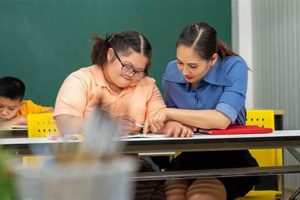
A suitable educational setting for autistic individuals prioritizes their unique learning styles and developmental needs. Such environments often feature smaller class sizes, structured routines, specialized instruction, and support for communication and social skills development. An example might include a school incorporating sensory integration therapy alongside traditional academic subjects.
Providing an appropriate learning environment profoundly impacts an autistic individual’s academic progress, social-emotional growth, and overall well-being. Historically, educational options for autistic individuals were limited. However, increased awareness and advocacy have led to a wider range of specialized programs and support systems, recognizing the importance of individualized education. These programs aim to foster independence, self-advocacy, and successful transitions into adulthood.
This discussion will explore key factors to consider when selecting an appropriate educational setting, including curriculum models, therapeutic interventions, and support services. It will also address the importance of collaboration between parents, educators, and therapists in creating a truly individualized learning experience.
Tips for Selecting an Appropriate Educational Setting
Choosing the right educational environment is crucial for the success of autistic individuals. The following tips offer guidance in navigating this important decision.
Tip 1: Prioritize Individualized Education Programs (IEPs). A robust IEP tailored to specific learning strengths and challenges is essential. Look for schools experienced in developing and implementing comprehensive IEPs.
Tip 2: Consider the learning environment. Some autistic individuals thrive in structured, predictable settings, while others benefit from more flexible approaches. Observe classrooms and consider sensory sensitivities.
Tip 3: Evaluate communication support. Strong communication skills are vital. Assess the school’s approach to augmentative and alternative communication (AAC) and other assistive technologies.
Tip 4: Investigate social skills development programs. Social interaction can be challenging for autistic individuals. Look for programs that offer opportunities for social skills practice and development in supportive environments.
Tip 5: Assess staff expertise and training. Educators and therapists should have specialized training in autism spectrum disorder and a deep understanding of neurodiversity.
Tip 6: Inquire about transition planning. Preparation for adulthood should begin early. Ensure the school provides comprehensive transition planning services to support post-secondary goals.
Tip 7: Seek parent and community involvement. A strong sense of community and parental involvement can significantly enhance the educational experience. Look for schools that foster collaboration and open communication.
By carefully considering these factors, families can identify educational settings that empower autistic individuals to reach their full potential.
These tips offer a starting point for making informed decisions about educational placement. The next section will explore further considerations for supporting autistic learners.
1. Individualized Curriculum

Individualized curricula are fundamental to effective education for autistic students. Autistic individuals exhibit diverse learning styles, strengths, and challenges. A standardized approach often fails to address these individual needs, potentially hindering academic progress and overall development. An individualized curriculum, conversely, acknowledges neurodiversity as a strength, tailoring educational experiences to maximize each student’s potential. This approach recognizes that learning goals, teaching methodologies, and support strategies must be customized to address specific sensory sensitivities, communication styles, and social-emotional needs. For example, a student with strong visual-spatial skills might benefit from visually-based learning materials, while another student might require explicit instruction in social communication.
The practical significance of individualized curricula lies in their ability to create accessible learning pathways. By focusing on individual strengths and providing support in areas of challenge, educators can foster a sense of competence and self-efficacy in autistic learners. This approach can lead to increased engagement, improved academic outcomes, and enhanced social-emotional well-being. Consider a student who struggles with traditional writing assignments. An individualized curriculum might incorporate alternative forms of expression, such as graphic organizers or multimedia projects, allowing the student to demonstrate their understanding in a way that aligns with their strengths. This tailored approach not only accommodates the student’s needs but also fosters creativity and self-expression.
Effective implementation of individualized curricula requires ongoing assessment, collaboration, and flexibility. Educators, therapists, and families must work together to develop, monitor, and adapt individualized education programs (IEPs) that reflect the evolving needs of each student. While challenges exist in balancing individualized instruction with broader educational standards, the benefits of personalized learning experiences are demonstrably significant for autistic students. A focus on individualization is a cornerstone of effective educational settings for autistic individuals, paving the way for academic success, social-emotional growth, and fulfilling life transitions.
2. Structured Environment

Structured environments play a vital role in supporting the learning and well-being of autistic individuals. Predictability and routine often minimize anxiety and promote a sense of security, allowing autistic students to focus on learning rather than navigating unpredictable situations. A structured environment provides clear expectations, consistent schedules, and organized physical spaces. This predictability reduces sensory overload and facilitates smoother transitions between activities. For example, a visually displayed daily schedule can help an autistic student anticipate upcoming events and reduce anxiety related to unexpected changes. Clear classroom routines for transitions, such as lining up for lunch or moving between learning centers, can also minimize disruptions and promote a calm learning environment. Organized physical spaces, with designated areas for different activities, contribute to a sense of order and control, reducing potential distractions and sensory overload.
The connection between structured environments and optimal learning outcomes for autistic individuals is well-established. Research indicates that structured settings contribute to improved focus, reduced anxiety, and increased engagement in learning activities. When autistic students feel safe and secure in their environment, they are better able to allocate cognitive resources to academic tasks and social interactions. A structured approach also facilitates the development of self-regulation skills. By providing clear expectations and consistent routines, educators can help autistic students learn to manage their own behavior and emotions, fostering independence and self-advocacy. For instance, a consistent routine for completing homework assignments can help a student develop organizational skills and time management strategies. Visual timers and checklists can further support self-monitoring and task completion.
Creating and maintaining a structured learning environment requires thoughtful planning and consistent implementation. Educators must consider the individual sensory sensitivities and learning preferences of each student when designing classroom routines and physical spaces. Collaboration with therapists and families is essential to ensure that the structured environment aligns with the student’s overall support plan. While maintaining structure is crucial, flexibility remains important. Unexpected events will inevitably occur, and educators must be prepared to adapt while still providing a sense of predictability and support. This adaptability ensures that the structured environment remains a source of stability and comfort, even in the face of unforeseen challenges.
3. Experienced Staff

The quality of education provided to autistic students is directly influenced by the expertise and experience of the staff. In the context of selecting the best school for autism, experienced staff is not merely a desirable asset but a critical component. A well-trained and experienced team possesses the knowledge and skills to create a supportive and effective learning environment tailored to the unique needs of autistic learners.
- Specialized Training in Autism Spectrum Disorder
Staff members should possess specialized training in autism spectrum disorder, encompassing a deep understanding of the diverse ways autism manifests. This includes knowledge of diagnostic criteria, evidence-based interventions, and common challenges faced by autistic individuals. For example, teachers experienced in working with autistic students understand the importance of adapting teaching methods to accommodate different communication styles and sensory sensitivities. This specialized training equips staff to differentiate instruction, personalize learning experiences, and effectively address behavioral challenges.
- Experience Implementing Individualized Education Programs (IEPs)
Practical experience in developing and implementing IEPs is essential for effectively supporting autistic students. IEPs outline specific learning goals, accommodations, and support services tailored to each student’s individual needs. Experienced staff understand the process of IEP development, collaboration with families and therapists, and ongoing monitoring of student progress. This expertise ensures that IEPs are not merely documents but dynamic tools that guide instruction and support student growth.
- Proficiency in Communication and Social Skills Support
Many autistic individuals experience challenges with communication and social interaction. Experienced staff should be proficient in supporting communication development, including augmentative and alternative communication (AAC) systems, social skills training, and strategies for fostering positive peer interactions. For example, a speech-language pathologist with experience working with autistic students can provide targeted interventions to address communication challenges and facilitate social communication development.
- Understanding of Sensory Sensitivities and Strategies for Sensory Integration
Sensory sensitivities are common among autistic individuals and can significantly impact learning and well-being. Experienced staff understand the diverse range of sensory processing differences and can implement strategies to create sensory-friendly learning environments. This includes adapting lighting, minimizing noise levels, providing access to sensory tools and breaks, and incorporating sensory integration techniques into daily routines.
These facets of experienced staff contribute significantly to the creation of a positive and effective learning environment for autistic students. A school with a skilled and knowledgeable team demonstrates a commitment to providing high-quality, individualized education that empowers autistic learners to reach their full potential. The presence of experienced staff is a key indicator of a school’s dedication to meeting the complex needs of autistic students and fostering their academic, social, and emotional growth.
4. Communication Support

Effective communication is fundamental to learning, social interaction, and overall well-being. For autistic individuals, who may experience diverse communication challenges, access to robust communication support is not merely beneficial but essential. In the context of selecting the best school for autism, communication support emerges as a cornerstone of a high-quality educational experience. A comprehensive approach to communication support addresses individual needs, fosters expressive and receptive language skills, and empowers autistic students to actively participate in their learning and social environments.
- Augmentative and Alternative Communication (AAC)
AAC encompasses a wide range of strategies and tools that support communication for individuals with complex communication needs. AAC can include sign language, picture exchange systems (PECS), speech-generating devices, and other assistive technologies. In a school setting, providing access to and training in appropriate AAC systems allows autistic students to express their needs, thoughts, and ideas effectively. For example, a student using a speech-generating device can participate in classroom discussions, ask questions, and engage in social interactions with peers. The availability of AAC and trained staff proficient in its implementation is a hallmark of a supportive educational environment for autistic learners.
- Speech-Language Therapy
Speech-language pathologists (SLPs) play a crucial role in supporting communication development for autistic students. SLPs provide individualized interventions to address specific speech and language challenges, such as articulation difficulties, language comprehension deficits, and pragmatic language impairments. They work collaboratively with educators and families to develop and implement communication goals within the context of the student’s IEP. Regular access to SLP services within the school setting ensures consistent support for communication development and facilitates carryover of skills into the classroom and other social environments.
- Social Communication Skills Training
Social communication skills are often a significant area of challenge for autistic individuals. Effective schools for autistic learners offer explicit instruction and opportunities to practice social communication skills in supportive environments. This can include social skills groups, role-playing activities, and structured peer interactions. These interventions focus on developing skills such as understanding social cues, initiating and maintaining conversations, and navigating social situations. Social communication skills training equips autistic students with the tools they need to build meaningful relationships and successfully navigate social complexities.
- Visual Supports
Visual supports are valuable tools for enhancing communication and understanding for many autistic individuals. Visual schedules, visual cues, and graphic organizers can provide predictability, clarify expectations, and support comprehension. In a school setting, visual supports can be integrated into classroom routines, academic instruction, and social interactions. For example, a visual schedule can help a student anticipate upcoming activities and transitions, while visual cues can support understanding of classroom rules and expectations. The strategic use of visual supports creates a more accessible and supportive communication environment for autistic learners.
These interconnected elements of communication support are critical components of a high-quality educational program for autistic students. A school that prioritizes communication support demonstrates a commitment to fostering expressive and receptive language skills, empowering autistic individuals to actively participate in their learning and social environments, and ultimately, enhancing their overall well-being and quality of life. The presence of these supports is a key indicator of a school’s dedication to meeting the diverse communication needs of autistic learners and creating a truly inclusive and supportive learning community.
5. Social Skills Development

Social skills development is integral to a high-quality educational program for autistic students. Autistic individuals often experience challenges with social interaction, including understanding social cues, navigating social situations, and building reciprocal relationships. These challenges can significantly impact academic performance, emotional well-being, and overall quality of life. A “best school” environment recognizes these challenges and provides robust support for social skills development, integrating explicit instruction, structured practice, and opportunities for real-world application. This integrated approach recognizes the interconnectedness of social skills development with academic success, emotional regulation, and preparation for independent living. For example, a school might offer social skills groups facilitated by trained professionals, providing a safe and supportive space for students to practice social interaction skills, such as initiating conversations, taking turns, and understanding nonverbal communication. These groups might use role-playing, video modeling, and social stories to teach specific social skills and provide opportunities for practice and feedback.
The practical significance of prioritizing social skills development within a “best school” setting is substantial. Improved social skills can lead to increased academic engagement, reduced social anxiety, and enhanced peer relationships. Students who feel more comfortable and confident in social situations are more likely to participate actively in classroom discussions, collaborate effectively on group projects, and build positive relationships with classmates. Furthermore, strong social skills are essential for success in post-secondary education, employment, and independent living. By providing robust social skills support, schools equip autistic students with the tools they need to navigate social complexities, advocate for their needs, and build fulfilling relationships throughout their lives. For example, a student who learns effective communication and conflict-resolution skills through school-based social skills training might be better equipped to navigate workplace dynamics and build positive relationships with colleagues in the future. This investment in social skills development pays dividends throughout the individual’s life trajectory.
Effective social skills development programs require a multi-faceted approach that includes individualized instruction, evidence-based strategies, and ongoing assessment. Collaboration between educators, therapists, and families is essential to ensure that social skills interventions are aligned with the student’s individual needs and overall support plan. While challenges exist in measuring and quantifying social skills growth, the long-term benefits of prioritizing social skills development are undeniable. A “best school” environment recognizes the critical role of social skills in overall well-being and provides comprehensive support to empower autistic students to thrive socially and academically. This commitment to fostering social competence is a key differentiator of a truly supportive and effective educational setting for autistic learners.
6. Transition Planning

Transition planning represents a crucial component of a “best school” environment for autistic students. It acknowledges that education extends beyond the classroom, preparing individuals for fulfilling adult lives. Effective transition planning begins early, ideally during the adolescent years, and focuses on developing the skills and resources necessary for successful post-secondary transitions. These transitions can encompass a variety of domains, including post-secondary education, vocational training, employment, independent living, and community participation. For example, a “best school” might incorporate vocational training programs into the curriculum, providing students with opportunities to explore different career paths and develop job-related skills. These programs might include internships, job shadowing experiences, or simulated work environments. The school might also collaborate with local businesses and community organizations to create employment opportunities for students after graduation.
The practical significance of robust transition planning lies in its ability to empower autistic individuals to achieve their post-secondary goals and lead fulfilling adult lives. Autistic individuals often benefit from structured support and explicit instruction in navigating the complexities of adulthood. Transition planning provides this essential scaffolding, addressing areas such as self-advocacy, independent living skills, social skills, and time management. For instance, a “best school” might offer workshops on independent living skills, such as budgeting, cooking, and using public transportation. They might also provide individualized support for students applying to colleges or vocational programs, assisting with applications, financial aid, and navigating the admissions process. These targeted interventions equip autistic individuals with the skills and resources they need to successfully transition to adulthood and achieve their desired outcomes.
Effective transition planning requires individualized approaches, recognizing the diverse aspirations and needs of autistic students. Collaboration among educators, families, support service providers, and the autistic individual is paramount. This collaborative approach ensures that transition plans are aligned with the individual’s strengths, interests, and long-term goals. While challenges exist in anticipating future needs and navigating complex systems of support, the benefits of comprehensive transition planning are undeniable. A “best school” environment recognizes the vital importance of preparing autistic students for successful adult lives and integrates transition planning as a core component of its educational philosophy. This commitment to long-term success sets these schools apart and empowers autistic individuals to thrive beyond the classroom walls.
Frequently Asked Questions
This section addresses common inquiries regarding educational settings for autistic individuals.
Question 1: What are the key characteristics of a suitable learning environment for an autistic individual?
Optimal environments often feature smaller class sizes, structured routines, individualized instruction, and specialized support for communication and social skills. Sensory considerations are also paramount, with accommodations made for individual sensitivities.
Question 2: How does an Individualized Education Program (IEP) benefit an autistic student?
An IEP outlines specific learning goals, accommodations, and support services tailored to the student’s unique strengths and needs. It serves as a roadmap for educational progress and ensures access to appropriate resources.
Question 3: What role do parents play in selecting an appropriate educational setting?
Parental involvement is crucial. Parents are encouraged to actively participate in the IEP process, visit prospective schools, communicate openly with educators and therapists, and advocate for their child’s needs.
Question 4: What are some common therapeutic interventions offered in specialized schools for autistic individuals?
Interventions may include speech-language therapy, occupational therapy, sensory integration therapy, social skills training, and behavioral support. The specific interventions offered vary depending on the individual’s needs and the school’s resources.
Question 5: How can one address the transition from school to adulthood for autistic individuals?
Transition planning should begin early and focus on developing skills for independent living, employment, and community participation. Collaboration between the school, family, and support service providers is essential.
Question 6: What are some indicators of a high-quality program for autistic learners?
Indicators include specialized staff training, low student-to-staff ratios, individualized curricula, comprehensive communication support, robust social skills programming, and a strong emphasis on transition planning.
Finding the right educational setting requires careful consideration of individual needs and available resources. Open communication and ongoing collaboration between families, educators, and therapists are essential for ensuring a positive and productive learning experience.
For further information and resources, please consult reputable organizations specializing in autism spectrum disorder.
Conclusion
Suitable educational settings for autistic individuals prioritize individualized learning, structured environments, experienced staff, robust communication support, dedicated social skills development, and comprehensive transition planning. These interconnected elements contribute significantly to academic success, social-emotional growth, and preparation for fulfilling adult lives. The emphasis on individualized curricula and specialized support recognizes the diverse learning styles and needs within the autism spectrum. Creating a supportive and empowering educational experience requires a collaborative approach among educators, therapists, families, and the autistic individual.
Optimal educational outcomes for autistic individuals necessitate ongoing advocacy, research, and a commitment to inclusive practices. Investing in high-quality educational programs tailored to the unique needs of autistic learners yields substantial long-term benefits, empowering individuals to reach their full potential and contribute meaningfully to society. The pursuit of “best school” environments reflects a broader societal recognition of the importance of neurodiversity and the value of creating inclusive communities where all individuals can thrive.